
From Half-Life to Wholeness
Never Kiss a Man in a Christmas JumperThis thread traces how Maggie’s carefully managed sense of incompleteness gives way to a more generous understanding of what makes a life whole.
increasing Bearing strength in each event
 decreasing
Bearing strength in each eventdecreasingA Life on Autopilot
A Life on Autopilot
The familiar measure
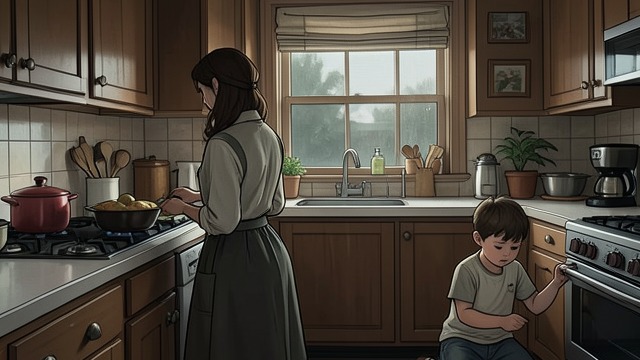
Maggie has built a capable life around work, family, and routine. She has raised Ellen, supported Paddy, and made a living creating wedding dresses, yet measures herself against the romance and family futures she helps other people celebrate.
Her years without another intimate relationship have become part of her definition of herself. She describes life as safe and satisfactory, but recognizes that evenings spent working, reading, and watching television have narrowed her expectations of what might still be possible.
A quiet incompleteness
The change in Ellen’s independence exposes what routine had concealed. Maggie has been a devoted mother, but her daughter’s growing life leaves Maggie uncertain about what remains when caring for others is no longer the center of every day.
The contrast between her steady competence and private loneliness establishes the novel’s central question: whether a person can mistake survival for fulfillment, and whether a life that has become smaller can still open outward.
A Glimpse Beyond Routine

A Glimpse Beyond Routine
Unexpected company
After the collision, Maggie agrees to let Marco recuperate in her home. The arrangement initially feels like an unwanted disruption, but their evenings soon fill with conversation, shared meals, and laughter that her ordinary schedule rarely contains.
The company does more than entertain her. It lets Maggie experience herself outside her habitual roles as mother, daughter, and dressmaker, while Marco’s curiosity and warmth make domestic life feel newly expansive.
The limits of safety
Maggie begins to notice that comfort without risk has also kept her from discovering what she wants. Her attraction to Marco unsettles the respectable distance she has maintained from romantic possibility.
The change is not yet a decision to pursue him. It is a recognition that her old definition of contentment may have been incomplete, and that the life she called sufficient could still hold a hunger she had stopped naming.
The Half-Life Named

The Half-Life Named
Love made visible
At Isabel and Michael’s hospital wedding, Maggie witnesses a couple choosing commitment amid uncertainty and illness. Their circumstances strip away ceremony’s usual distractions and leave the essential fact of their devotion unmistakable.
The experience sharpens Maggie’s awareness of the difference between being content and feeling fully alive. She has spent years watching other people’s happiness from the edges of their weddings, while keeping her own desires safely untested.
A choice against retreat
Maggie kisses Marco and chooses, for the moment, not to return to her empty home. The gesture marks a movement toward experience rather than another attempt to make emotional caution feel like peace.
Her realization that her life has been only a “half-life” does not mean that she has failed or that her years with Ellen were lesser. It means she is beginning to imagine herself as more than the caretaker of other people’s beginnings.
Fear Rebuilds the Walls
Fear Rebuilds the Walls
The cost of imagining loss
As Maggie watches Marco delight in the children gathered for Luca’s Christening, she interprets his ease with them as evidence of a future she cannot provide. Her infertility turns a moment of happiness into a feared comparison between what he might want and what she believes she can offer.
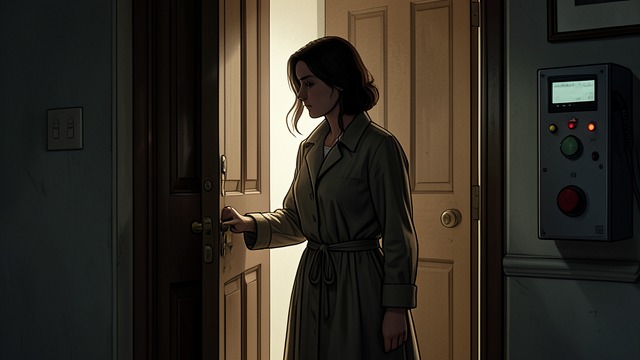
She confesses her love and infertility to Leah, but does not yet discuss the problem with Marco. Instead, she decides that ending the relationship protects him from having to choose between love and the possibility of children.
Retreat disguised as generosity
Maggie’s departure is framed in her own mind as an act of care, but it also protects her from the possibility that Marco might eventually leave. She tries to control the timing of a feared loss by causing the separation herself.
The choice exposes the limits of her new understanding: recognizing that life could be fuller does not immediately give her courage to risk it. The old half-life remains tempting because its disappointments are known and its future seems easier to manage.
Wholeness Without Guarantees

Wholeness Without Guarantees
A different account of the future
Marco finds Maggie beside the river and argues that she has mistaken his uncertainty about children for a fixed demand. He does not promise that their life will be simple; he tells her that he wants a future with her as she is.
He also imagines ways that family might grow beyond biological parenthood, including adoption and a close place in the lives of Luca and Rob’s children. His answer challenges Maggie’s assumption that her infertility makes her an incomplete partner.
Choosing a real life
The restored edition of Alice in Wonderland shows that Marco has listened closely to Maggie’s history and remembered what mattered to her. When she accepts the possibility of trying, her decision is not based on a guarantee against heartbreak but on trust in the life they might build.
A year later, their wedding and their place among a wider family confirm the story’s redefinition of wholeness. Maggie is not made complete by becoming a wife; rather, she can love and be loved without treating the absence of future biological children as proof that her life is deficient.
Before Marco’s arrival in early December
During the first week of Marco’s stay
After the hospital wedding on Christmas Eve
Christmas Eve in Scotland, before Maggie leaves
Christmas Day beside the river, near midnight
